Popular audiobooks
Beasley's Christmas Party - Booth Tarkington
A Little Princess (Version 3) - Frances Hodgson Burnett
Laramie Holds The Range - Frank H. SPEARMAN
The Je Ne Scai Quoi - William WHITEHEAD
Grimm's Fairy Tales - Retold in One-Syllable Words - Jacob & Wilhelm Grimm
A Soldier's Letters to Charming Nellie - Joseph Benjamin Polley
The Great Gold Rush: A Tale of the Klondike - William Henry Pope JARVIS
Vigils - Aline KILMER
The French Revolution Volume 2 The Constitution - Thomas CARLYLE
Multi-version (Weekly and Fortnightly poetry)
649 books
Time00:38:24
To His Coy Mistress (version 2) - Andrew MARVELL
Time0:17:56
Give All To Love - Ralph Waldo Emerson
Time0:23:38
Christmas Morning - Eugene Field
Time00:16:19
Sonnet 130 - William Shakespeare

Time00:09:00
The Twilight Hour - Susanna Moodie
Time0:16:26
Christmas Bells - Henry Wadsworth Longfellow
Time0:29:28
The Secret - William Cosmo MONKHOUSE

Time0:24:25
History of a Life - Barry CORNWALL
Time00:38:46
The Wee Man - A Romance. - Thomas Hood
Time0:15:28
The Angler - Thomas Buchanan READ
Time00:21:02
Ozymandias of Egypt - Percy Bysshe Shelley
Time0:29:40
Miracles - Walt Whitman

Time0:23:12
We Have Been Friends Together - Caroline Elizabeth Sarah Norton
Time00:13:19
Hope - Emily Dickinson

Time00:32:45
In Remembrance - Arthur MACY
Time0:23:13
Lydia is gone this many a year - Lizette Woodworth REESE
Time0:32:16
Two Musicians - Sarah Orne Jewett

Time00:23:36
The Voice of the Void - George Parsons Lathrop
Time0:17:56
Midsummer - William Cullen Bryant

Time00:29:39
In November - Archibald Lampman

Time00:16:48
July - Michael Field

Time0:27:16
Merry Autumn - Paul Laurence Dunbar
Time00:20:05
The Grass - Emily Dickinson

Time00:27:18
Among the Rice Fields - Laurence Hope
Time0:29:51
The Briefless Barrister - John Godfrey Saxe

Time0:12:15
Retort - Paul Laurence Dunbar
Time00:38:14
How a Fisherman Corked up His Foe in a Jar - Guy Wetmore Carryl
Time0:43:08
The Face on the Barroom Floor - Hugh Antoine D'ARCY
Time0:30:41
Song (Seward version) - Anna SEWARD
Time00:37:53
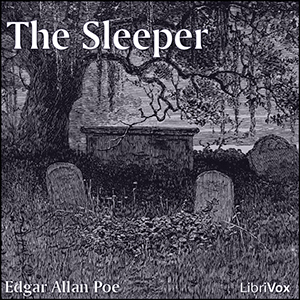
The Sleeper - Edgar Allan Poe
Poetry is a genre of literature that uses language to evoke emotions, paint vivid imagery, and convey complex ideas in a condensed form. It often employs various literary devices such as rhyme, meter, alliteration, metaphor, and simile to create a musical and rhythmic effect. Poetry can take many forms, including sonnets, haikus, free verse, ballads, and epics, among others. It is often used to explore themes such as love, nature, death, politics, and social issues. Poetry can be deeply personal and introspective or can speak to universal experiences and emotions. It is a powerful means of expression that has the ability to move and inspire readers.