Popular audiobooks

How to Out-Jeff Uncle Jeff - Wicked Uncle
Queen Lucia - E. F. Benson
The National Geographic Magazine Vol. 08 - 04. April 1897 - National Geographic Society
Short Poetry Collection 218 - Various
Five Little Peppers at School - Margaret Sidney
Going His Way: Little Talks to Little Folks - Rev. Gerald T. Brennan
The Intrusion of Jimmy - P. G. Wodehouse
Enquiry Concerning Political Justice and its Influence on Morals and Happiness. Volume 2 - William GODWIN
The Heart of Philura - Florence Morse Kingsley
Poetry
651 books
Time6:07:42
The Wit and Humor of America, Vol 04 - Various
Time17:10:08
The World’s Story Volume XII: The United States - Eva March Tappan
Time01:10:05
Flame and Shadow, Version 2 - Sara Teasdale
Time0:34:59
Opportunity - Walter MALONE
Time00:51:11
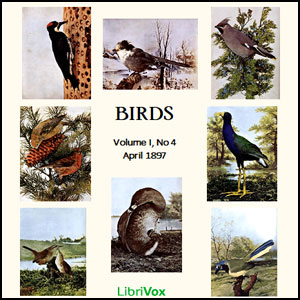
Birds, Vol. I, No 4, April 1897 - Various
Time0:21:22
A Song For New Year's Eve - William Cullen Bryant
Time0:45:16
An Essay on Criticism - Alexander Pope
Time02:26:24
Life Waves - Frances Cook Steen

Time0:13:25
To the United States of America - Robert Bridges
Time1:23:03
Short Poetry Collection 101 - Various
Time0:20:55
The Journey of Life - William Cullen Bryant

Time10:59:01
Poems of American History, Volume 4, The Civil War - Various
Time0:13:09
Evanescence - Harriet Prescott Spofford
Time02:52:59
The Old Soak, and Hail And Farewell - Don MARQUIS
Time01:09:17
Prometheus Bound (Browning Translation) - Aeschylus
Time00:39:51
Nets to Catch the Wind - Elinor Wylie
Time0:14:47
To Lesbia - Gaius Valerius CATULLUS
Time4:12:04
Poems by the Most Deservedly Admired Mrs. Katherine Philips, The Matchless Orinda - Katherine Philips
Time01:03:47
Songs by the Sea - Rebecca Ruter Springer

Time2:29:22
In Memoriam A.H.H. - Alfred, Lord Tennyson
Time0:51:47
Ottawa Folk Festival Robert Service Collection - Robert W. Service
Time00:29:06
War Is Kind (Collection) - Stephen Crane
Time0:20:18
Promises Like Pie-Crust - Christina ROSSETTI
Time02:01:57
Contrasted Songs - Marian Longfellow
Time0:49:55
Short Poetry Collection 004 - Various
Time1:46:01
Long Poems Collection 004 - Various
Time02:18:14
From Dawn to Noon: Poems - Violet FANE
Time00:06:56
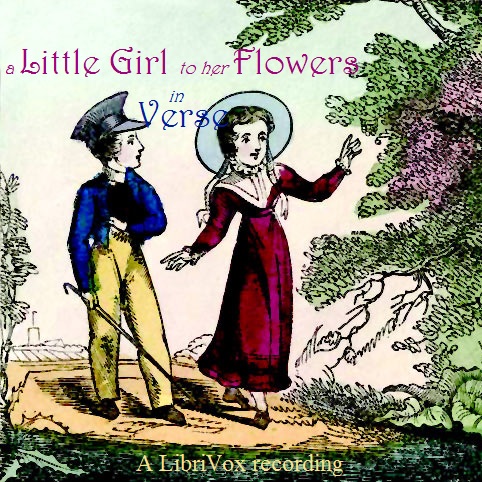
A Little Girl to Her Flowers - Anonymous
Time01:40:59
Short Poetry Collection 217 - Various
Time0:17:56
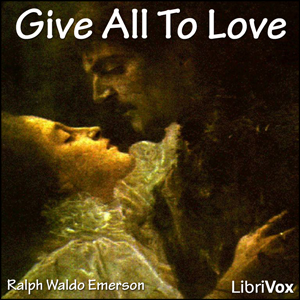
Give All To Love - Ralph Waldo Emerson
Poetry is a genre of literature that uses language in a creative and artistic way to express emotions, ideas, and experiences. Poems can be written in various forms, including sonnets, haikus, free verse, and more. The language used in poetry is often rich and imaginative, with a focus on metaphor, symbolism, and imagery. Poets use various techniques such as rhyme, rhythm, repetition, and alliteration to create a musical quality in their work. Poetry can cover a wide range of themes, from love and nature to social issues and political commentary. It is a genre that allows for personal expression and interpretation, inviting readers to connect with the emotions and experiences of the poet.
- Poetry is a genre of literature that uses language in a creative and artistic way.
- The purpose of poetry is to express emotions, ideas, and experiences.
- Poems can be written in various forms, including sonnets, haikus, free verse, and more.
- The language used in poetry is often rich and imaginative, with a focus on metaphor, symbolism, and imagery.
- Poets use various techniques such as rhyme, rhythm, repetition, and alliteration to create a musical quality in their work.
- Poetry can cover a wide range of themes, from love and nature to social issues and political commentary.
- Poetry allows for personal expression and interpretation, inviting readers to connect with the emotions and experiences of the poet.
- Poetry is a genre of literature that uses language in a creative and artistic way.
- The purpose of poetry is to express emotions, ideas, and experiences.
- Poems can be written in various forms, including sonnets, haikus, free verse, and more.
- The language used in poetry is often rich and imaginative, with a focus on metaphor, symbolism, and imagery.
- Poets use various techniques such as rhyme, rhythm, repetition, and alliteration to create a musical quality in their work.
- Poetry can cover a wide range of themes, from love and nature to social issues and political commentary.
- Poetry allows for personal expression and interpretation, inviting readers to connect with the emotions and experiences of the poet.