Popular audiobooks
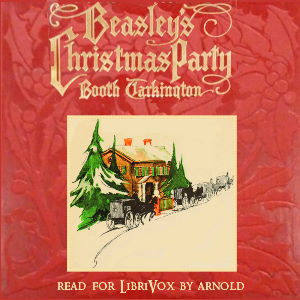
Beasley's Christmas Party - Booth Tarkington
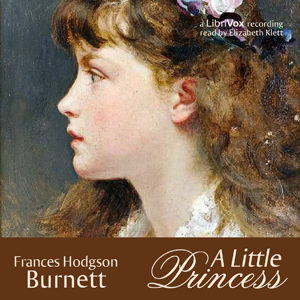
A Little Princess (Version 3) - Frances Hodgson Burnett
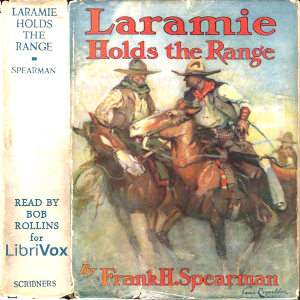
Laramie Holds The Range - Frank H. SPEARMAN
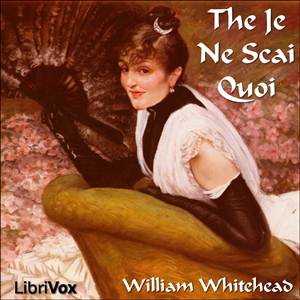
The Je Ne Scai Quoi - William WHITEHEAD
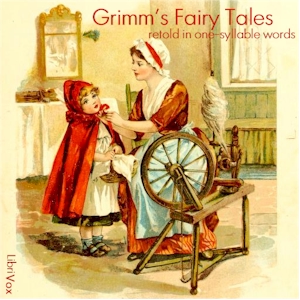
Grimm's Fairy Tales - Retold in One-Syllable Words - Jacob & Wilhelm Grimm
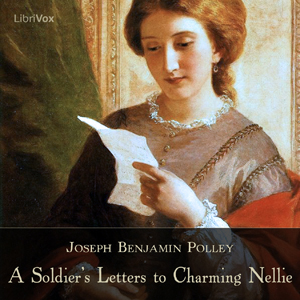
A Soldier's Letters to Charming Nellie - Joseph Benjamin Polley
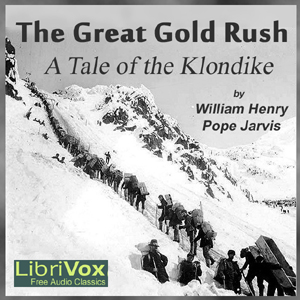
The Great Gold Rush: A Tale of the Klondike - William Henry Pope JARVIS
Vigils - Aline KILMER
The French Revolution Volume 2 The Constitution - Thomas CARLYLE
Multi-version (Weekly and Fortnightly poetry)
649 books
Time00:15:43
The night is freezing fast - A. E. Housman
Time0:27:03
Song of the Soldiers' Wives - Thomas Hardy
Time00:10:43
The Seasons' Comfort - Robert Laurence Binyon
Time0:31:10
The Open Window - Edward Rowland SILL
Time0:28:12
Home - Anne Brontë
Time0:25:06
The Poet's Forge - Helen Hunt Jackson
Time00:24:28
Goin' Home To-Day - Will Carleton
Time00:13:44
A Christmas Letter - Helen Leah Reed
Time0:07:56
In the Desert - Stephen Crane
Time00:20:03
End of Harvest - William Bell SCOTT
Time00:17:14
A Christmas Carol - Charles Kingsley
Time00:24:13
The Empty Room - Katharine Lee BATES
Time00:14:47
Columbus - Joaquin MILLER
Time00:43:34
To His Mistress Going to Bed - John Donne
Time0:21:26
Solitude (Pope) - Alexander Pope
Time00:19:07
Wind Of The Sea - James Whitcomb Riley
Time00:30:59
Witnesses - Madison Cawein
Time0:23:37
The Hillside Thaw - Robert Frost
Time0:14:29
A Perfect Strain - Isabella CRAWFORD
Time0:24:38
Parting - Charlotte Brontë
Time0:10:46
Cana - James Freeman CLARKE
Time00:29:22
The Churchyard by the Sea - Jessie C. Howden
Time0:15:06
The Last Buccaneer - Thomas Babington Macaulay
Time00:18:31
The Workman's Dream - Edgar A. GUEST
Time0:22:52
To a Faded Rose - Maurice Switzer
Time00:22:31
On the Shore - Susan Coolidge
Time0:17:01
Stupidity - Amy Lowell
Time1:23:33
The Bells - Edgar Allan Poe
Time00:15:21
The Presence of Love - Samuel Taylor Coleridge
Time00:17:59
Fancy - Lewis Carroll
Poetry is a genre of literature that uses language to evoke emotions, paint vivid imagery, and convey complex ideas in a condensed form. It often employs various literary devices such as rhyme, meter, alliteration, metaphor, and simile to create a musical and rhythmic effect. Poetry can take many forms, including sonnets, haikus, free verse, ballads, and epics, among others. It is often used to explore themes such as love, nature, death, politics, and social issues. Poetry can be deeply personal and introspective or can speak to universal experiences and emotions. It is a powerful means of expression that has the ability to move and inspire readers.